Architecture summary
Bring the journey together: focused responsibilities, verifiable work, enforced boundaries and human oversight.
Design for reliability, not just capability
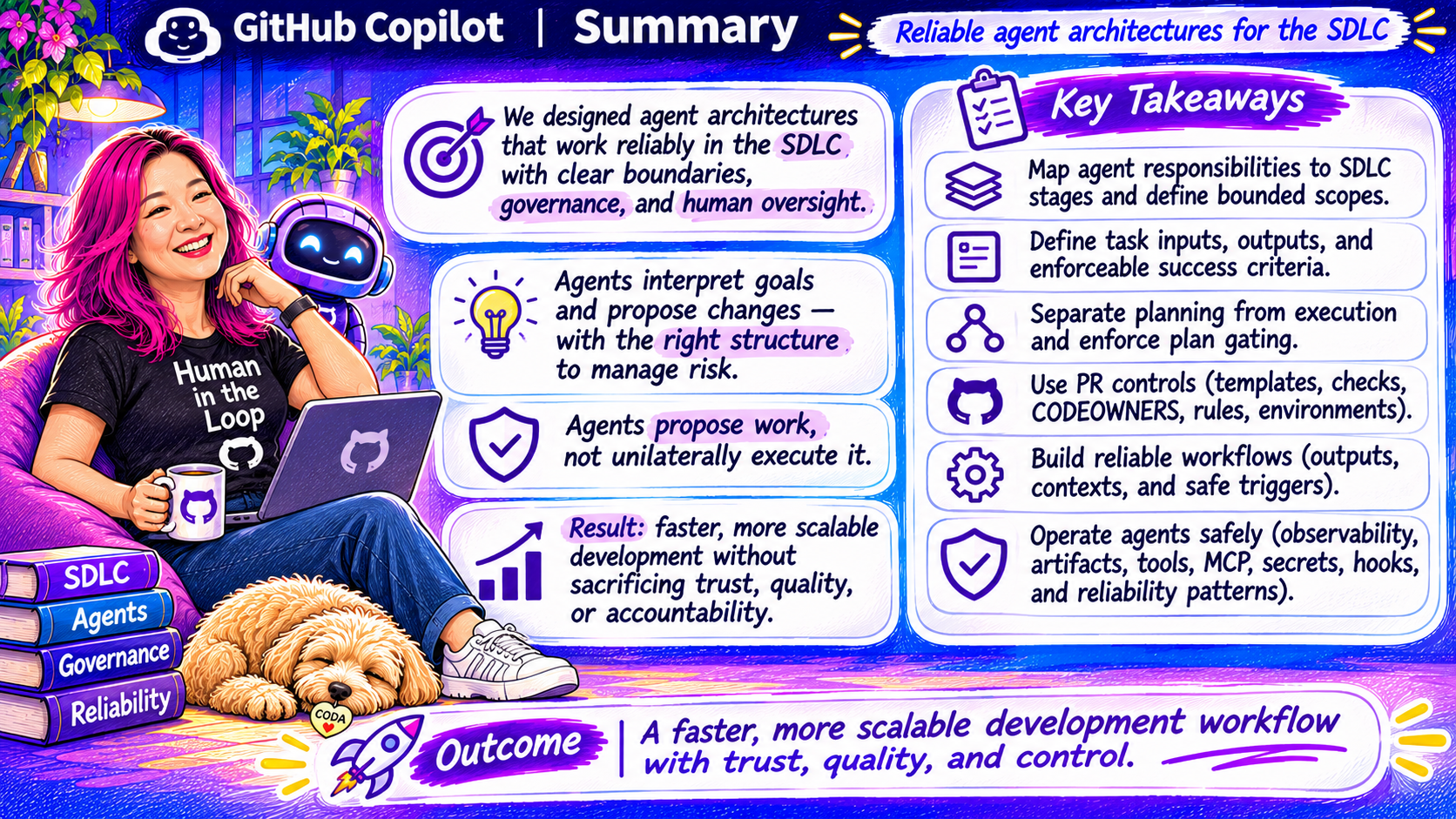
The final infographic brings together the central idea of the journey: useful agent systems need clear boundaries, governance and human oversight. Agents can interpret goals and propose changes, while the surrounding architecture determines how those changes are evaluated and accepted.
The six takeaways
- Map responsibilities to SDLC stages and keep scope bounded.
- Define task inputs, outputs and enforceable success criteria.
- Separate planning from execution when risk requires approval of intent.
- Use pull-request controls, expert review and environment protection.
- Build reliable workflows with structured handoffs and safe triggers.
- Operate with observability, least privilege and a clear escalation path.
Apply the ideas to one real workflow
Start with a small task. Write its contract, identify its allowed tools and decide which evidence demonstrates success. Configure independent controls for sensitive actions and inspect what happens when a check fails.
The intended outcome is a faster development process without giving up trust, quality or accountability. That outcome depends on tested controls and review, not on a persona or diagram alone.
Continue to Resources for the author's six recommended learning links and the draft's product-reference checks. Developing in Agentic AI Systems - Part 1 is a useful next step for architecture, SDLC integration and tooling.