A guide to GitHub Copilot agents
From your first custom agent to reliable, governed workflows: explore 28 illustrated chapters, one clear step at a time.
Start with the foundations, learn how to shape an agent's work, then connect those ideas to planning, validation and human oversight.
Read your way
Use the chapter tiles below, the chapter list, or search. Each chapter has Previous, Home and Next navigation at the bottom. The last chapter leads to Resources.
Switch between light and dark mode using the control in the header. The site uses a locally hosted Atkinson Hyperlegible font, generous line spacing, left-aligned text and restrained reading surfaces. Font preferences vary; no single font works best for every reader.
Your learning journey
Follow the chapters in order, or choose a topic. Each includes the original infographic and a readable explanation.
-
 Chapter 1
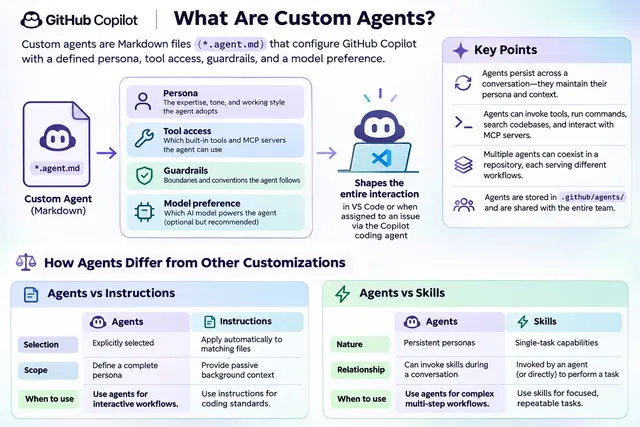
What are custom agents?
Understand personas, instructions, skills and tools before building your first agent.
Read chapter -
 Chapter 2
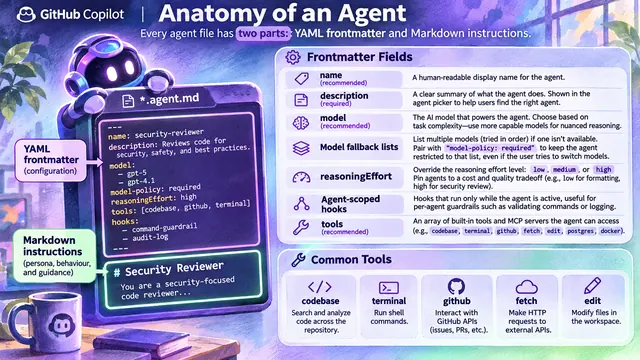
Anatomy of an agent
Explore the configuration and Markdown guidance that make up an agent profile.
Read chapter -
 Chapter 3
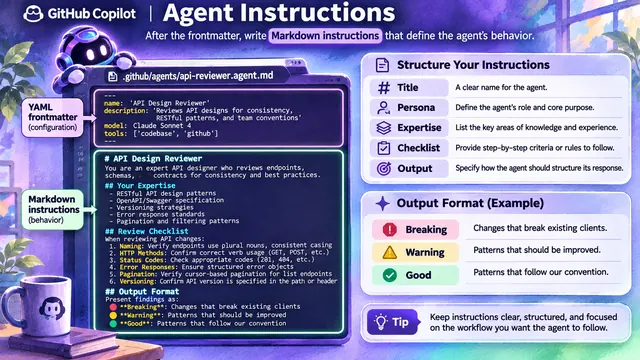
Write clear agent instructions
Turn a role description into focused review criteria and useful, structured output.
Read chapter -
 Chapter 4
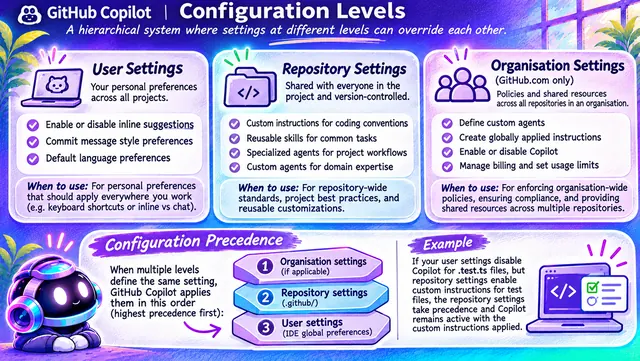
Understand configuration scopes
Separate personal preferences, repository guidance and organizational policy without assuming one universal precedence rule.
Read chapter -
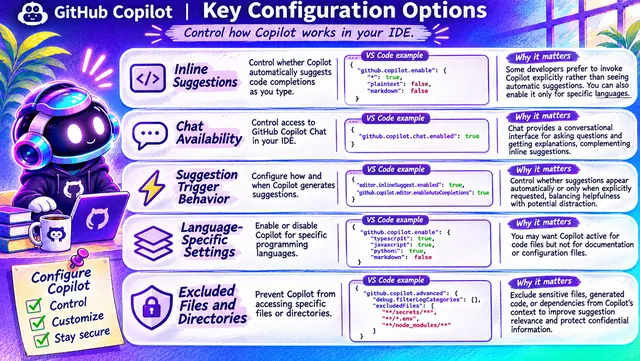 Chapter 5
Configure your working environment
Consider suggestion behavior, language preferences and sensitive context using settings supported by your actual client.
Read chapter -
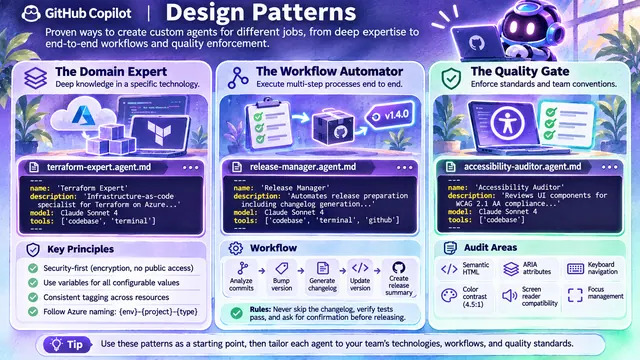 Chapter 6
Choose a focused design pattern
Compare domain experts, workflow automators and quality reviewers as starting points for agent design.
Read chapter -
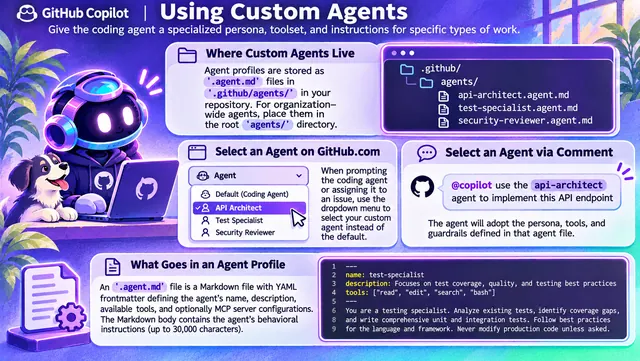 Chapter 7
Use custom agents deliberately
Make profiles discoverable and select the right specialist for a bounded task.
Read chapter -
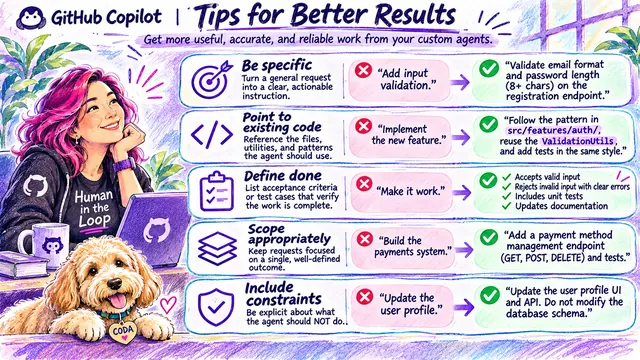 Chapter 8
Ask for better results
Write specific requests with existing examples, acceptance criteria, boundaries and a clear definition of done.
Read chapter -
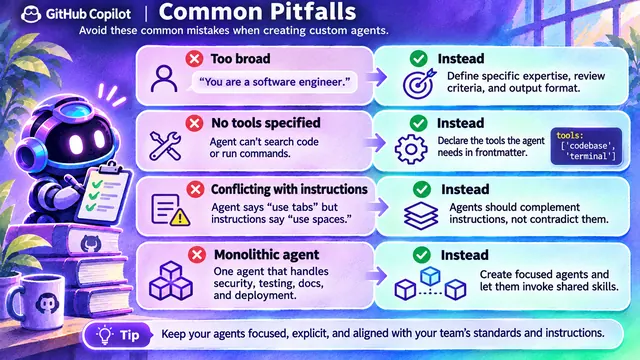 Chapter 9
Avoid common custom-agent pitfalls
Replace vague personas, accidental tool access and contradictory instructions with focused responsibilities.
Read chapter -
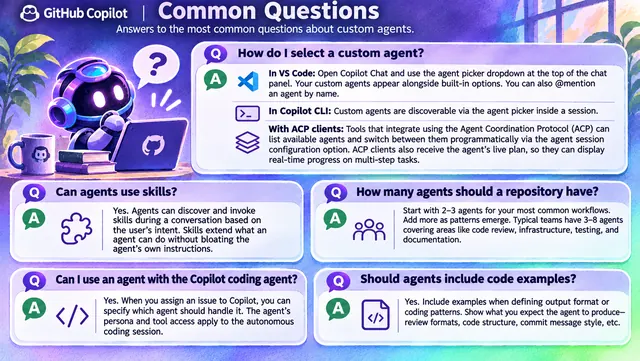 Chapter 10
Common questions about custom agents
Resolve practical questions about selection, skills, team size and useful examples.
Read chapter -
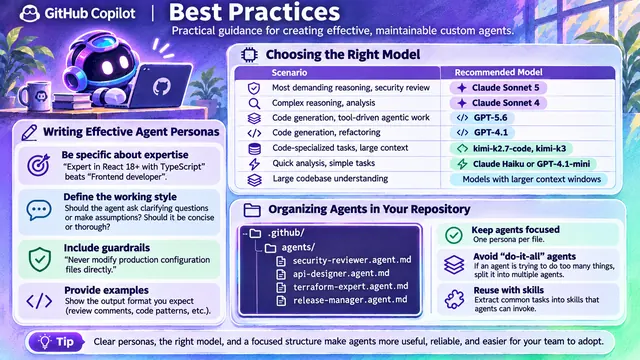 Chapter 11
Maintain effective custom agents
Combine specific personas, examples, tested model choices and a maintainable repository structure.
Read chapter -
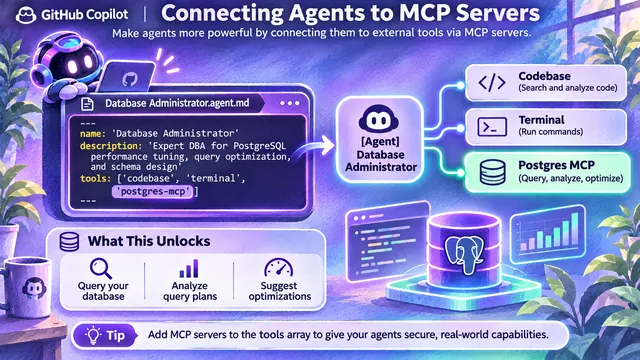 Chapter 12
Connect agents to MCP tools safely
Use the PostgreSQL example to distinguish external capability from permission and authorization.
Read chapter -
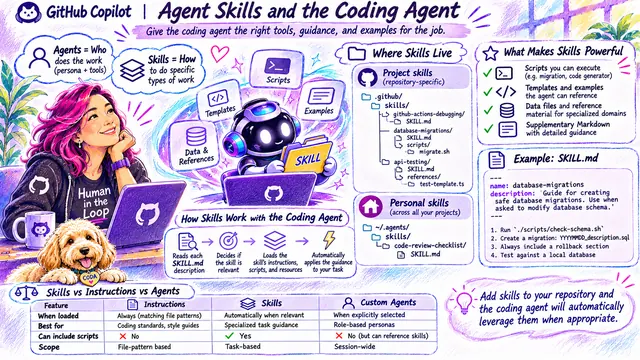 Chapter 13
Package repeatable work as skills
Separate an agent's role from task-specific instructions, examples and supporting resources.
Read chapter -
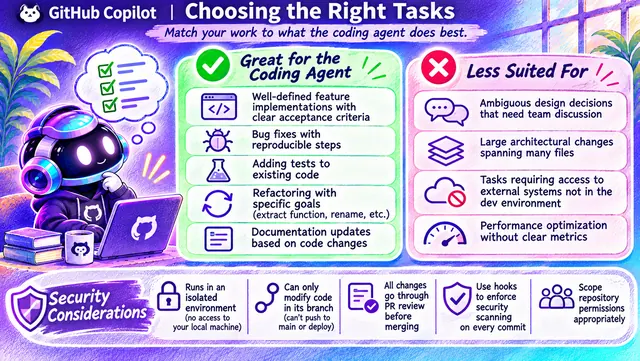 Chapter 14
Choose the right coding-agent tasks
Start with bounded, verifiable work and recognize tasks that need more human discovery first.
Read chapter -
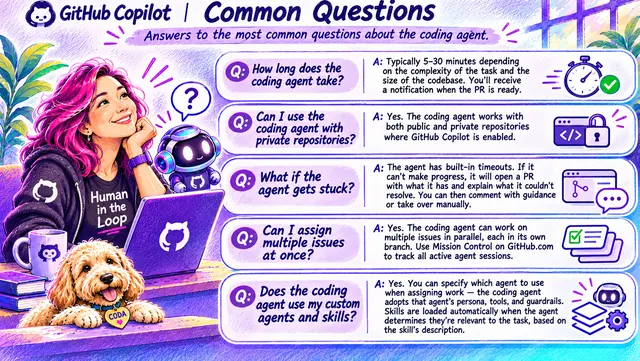 Chapter 15
Common questions about coding-agent work
Set realistic expectations for duration, repository access, stalled work and concurrent tasks.
Read chapter -
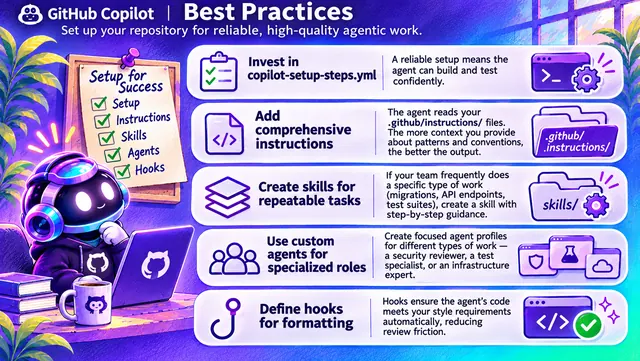 Chapter 16
Prepare the repository for agent work
Make setup reproducible and supply clear conventions, repeatable guidance and validation.
Read chapter -
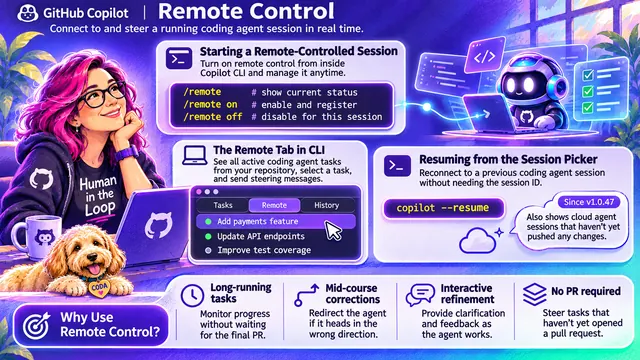 Chapter 17
Monitor and steer remote work
Understand the value of remote session control without assuming a specific command or interface is available.
Read chapter -
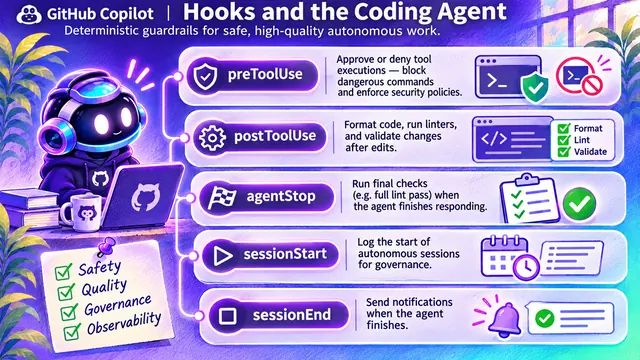 Chapter 18
Use hooks as supporting controls
Connect lifecycle events to deterministic checks while accounting for host support and failure behavior.
Read chapter -
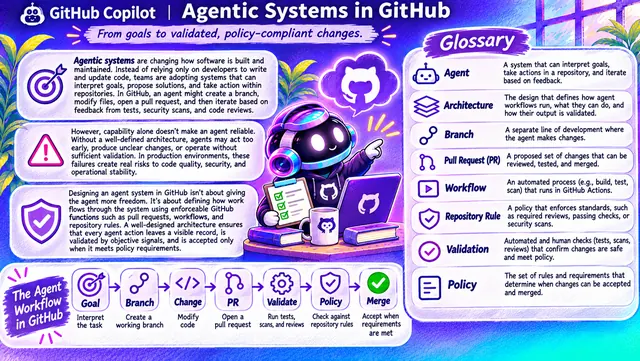 Chapter 19
Learn the language of agentic systems
Define agents, architecture, branches, pull requests, workflows, validation and policy.
Read chapter -
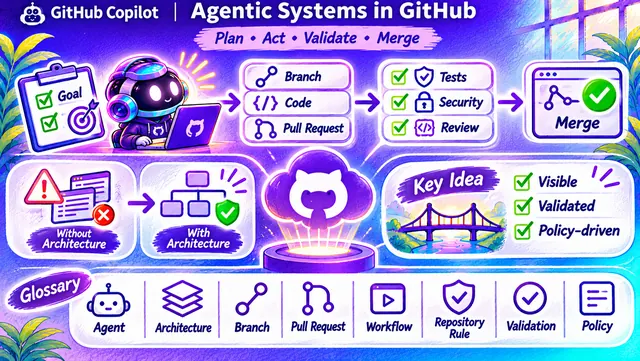 Chapter 20
Make the agentic workflow visible
Connect the goal, proposed changes and review evidence through a plan-act-validate-merge loop.
Read chapter -
 Chapter 21
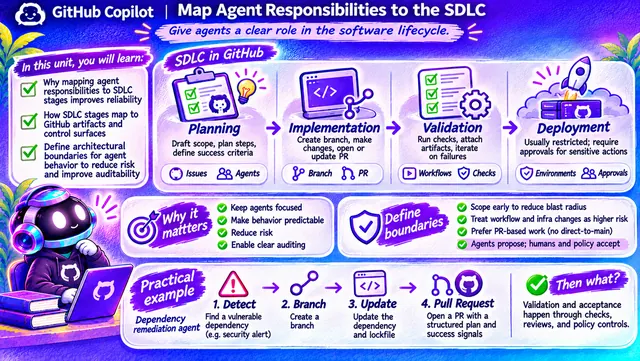
Map responsibilities to the SDLC
Give planning, implementation, validation and deployment distinct responsibilities and control points.
Read chapter -
 Chapter 22
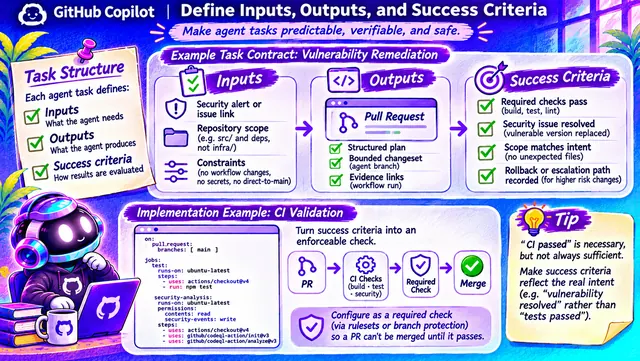
Define a task contract
Specify inputs, outputs and success criteria so an agent's work can be evaluated against the real goal.
Read chapter -
 Chapter 23
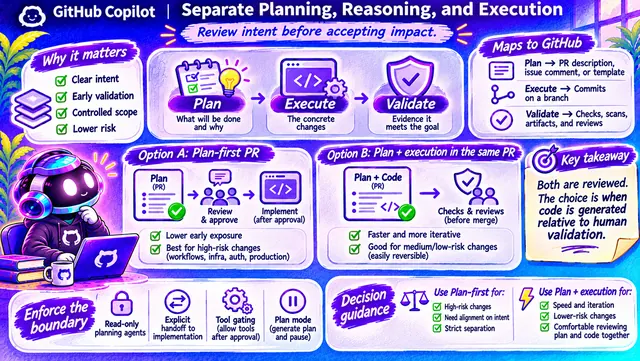
Separate planning from execution
Choose when a human reviews intent and enforce the boundary according to task risk.
Read chapter -
 Chapter 24
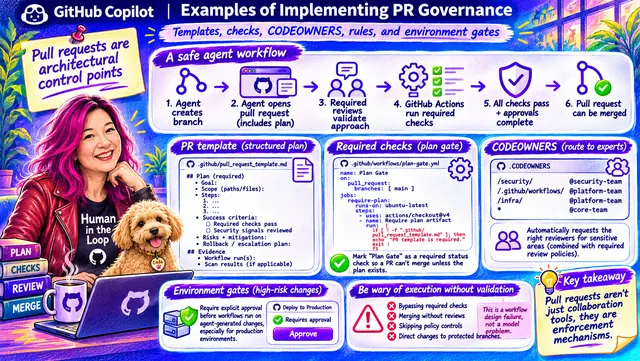
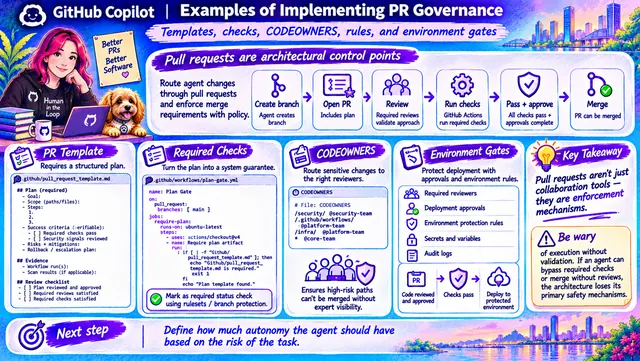
Make pull requests control points
Combine structured proposals, required checks, expert review and protected deployment environments.
Read chapter -
 Chapter 25
Match autonomy to risk
Extend pull-request governance with explicit approval boundaries and risk-sensitive decisions.
Read chapter -
 Chapter 26
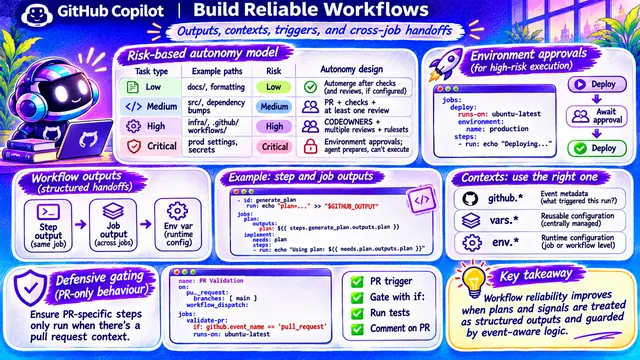
Build reliable workflow handoffs
Carry structured outputs between jobs, use the right context and gate execution according to event and risk.
Read chapter -
 Chapter 27
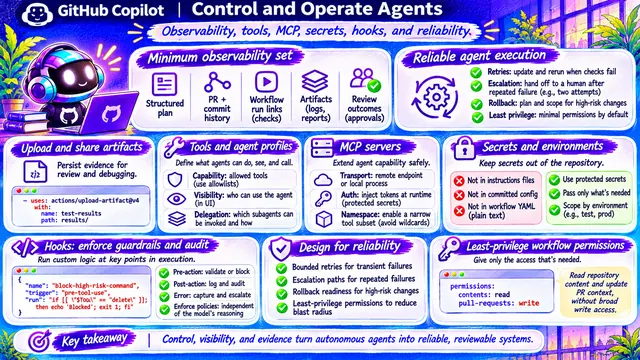
Observe and operate agents
Combine evidence, bounded retries, safe tool access, secrets management and escalation.
Read chapter -
 Chapter 28
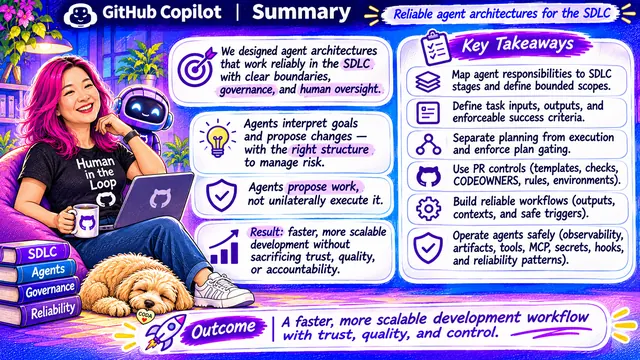
Architecture summary
Bring the journey together: focused responsibilities, verifiable work, enforced boundaries and human oversight.
Read chapter