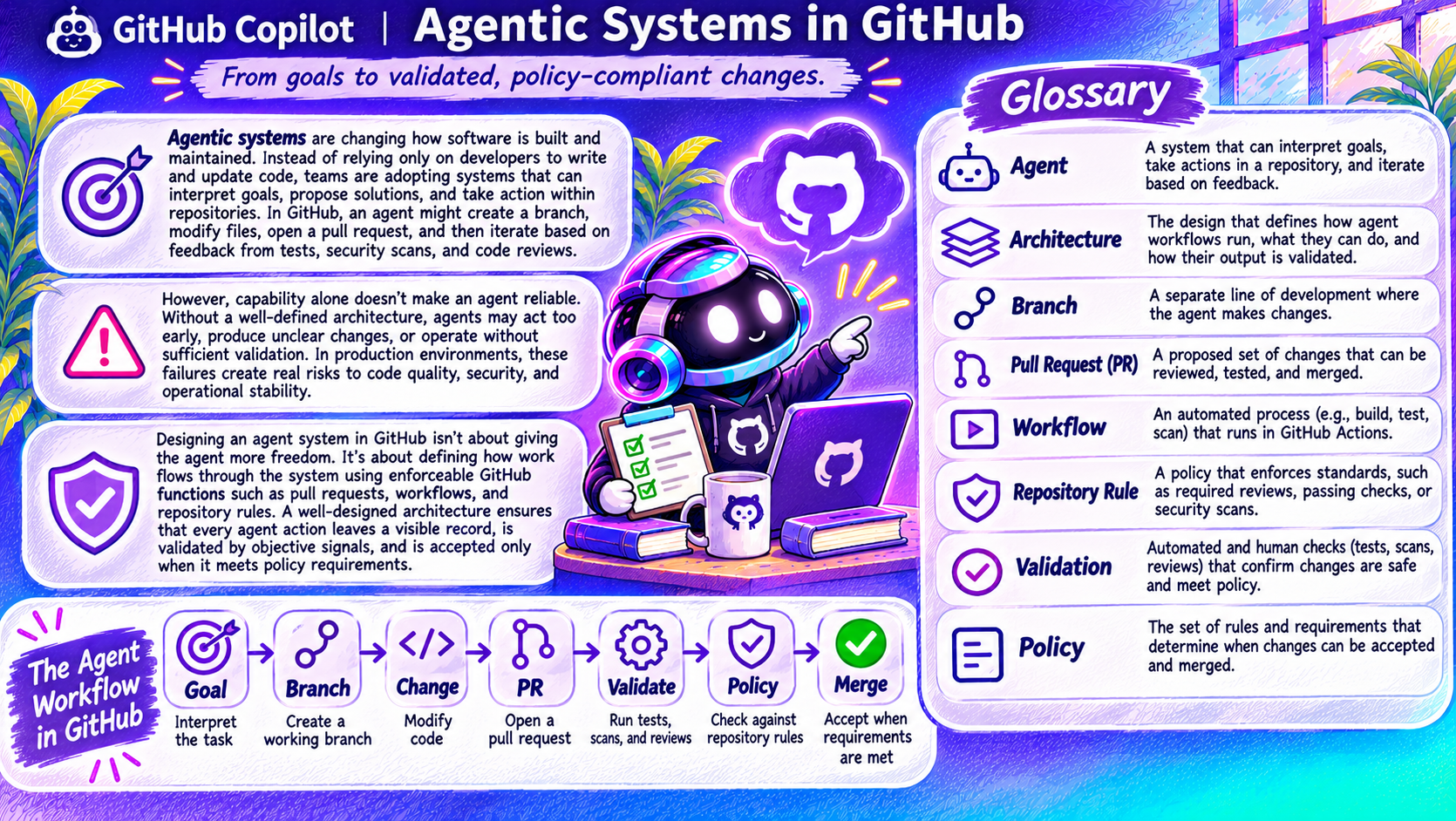
Learn the language of agentic systems
Define agents, architecture, branches, pull requests, workflows, validation and policy.
From a goal to a reviewed change
The infographic presents a system that interprets a goal, creates a working branch, proposes a change and gathers validation before acceptance. Architecture determines where each step happens and which controls constrain it.
A practical glossary
Agent: a system that interprets a task and can take supported actions. Architecture: the design of its workflow, responsibilities and boundaries. Branch: a separate line of development. Pull request: a proposed changeset for discussion and review.
Workflow: an automated process such as build, test or scan. Validation: objective and human checks on whether the result meets requirements. Policy: the rules for acceptable behavior and acceptance. Repository rule: an enforceable repository control where configured.
Capability is not reliability
More tools or autonomy do not automatically make a system dependable. Make work visible, validate outcomes and ensure acceptance depends on configured controls rather than the agent's own confidence.
The pictured sequence is a recommended design pattern, not a description of every Copilot session's default behavior.
Continue with Microsoft's Foundations of Agentic AI in GitHub module for more on the lifecycle, traceability and contributor model.