Chapter 2: What We'll Explore
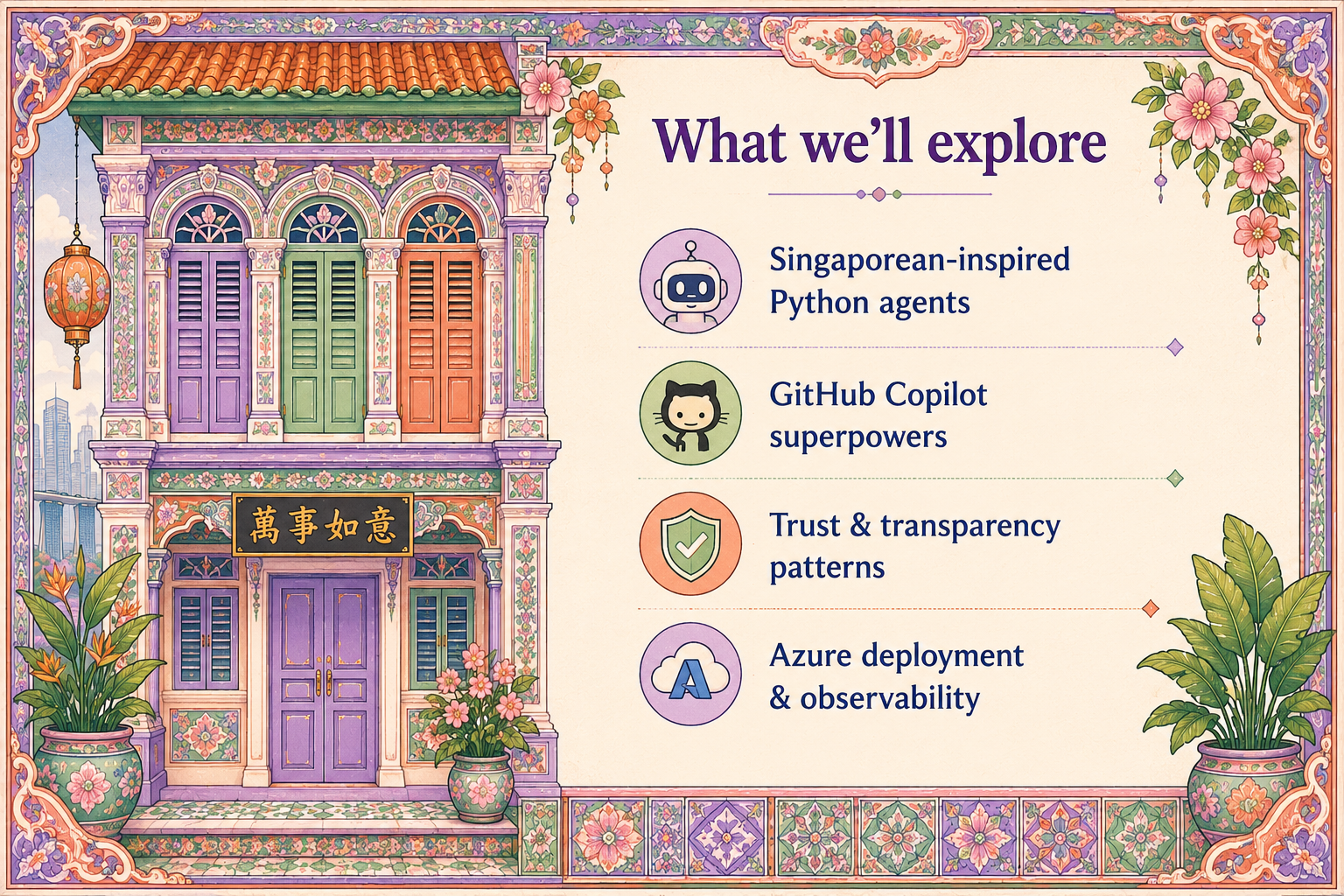
Here are the four signposts for the journey ahead:
- Three Singaporean-inspired Python agents: a hawker recommender, a haze tracker, and a Merlion that tells dad jokes.
- GitHub Copilot superpowers: Copilot writing the boring, safety-critical scaffolding so you focus on behaviour.
- Trust and transparency patterns: the architectural style that runs through all three agents.
- Azure deployment and observability: how this survives contact with real users.
Why it matters
The agenda is also a mental model. Each agent is the same trust pattern applied to a different domain. Once you internalise the pattern, you can add a fourth or fifth agent without reinventing anything.
What you get, by role
| If you are a… | You will gain… |
|---|---|
| Developer | A Copilot workflow, code patterns, and three runnable examples |
| Decision maker | A trust vocabulary and an architecture you can audit |
Key terms
- Pattern over product: you are not buying three bespoke apps; you are learning one reusable pattern applied three times.
- Blast radius: how much can go wrong when one component fails. Small agents mean a small blast radius.