Chapter 14: Design for Observable Trust Signals
Overview
Continuously improve and monitor your AI Agents:
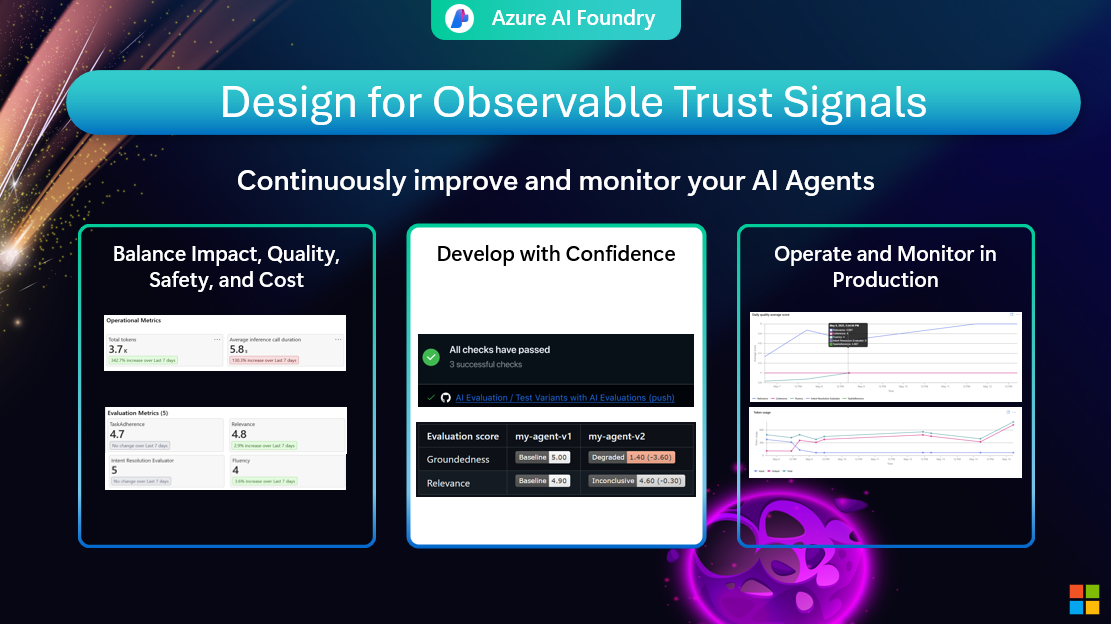
We need to design our systems so that trust is not just assumed, but observable and measurable. In practice, this means continuously improving and monitoring our AI agents—not just for performance, but for impact, quality, safety, and cost.
With tools like Azure AI Foundry, we can track key operational and evaluation metrics in real time—such as groundedness, relevance, fluency, and intent resolution. These metrics help us spot issues early, ensure our AI is behaving as intended, and give us the confidence to develop and operate AI responsibly in production.
Ultimately, designing for observable trust signals means making trust visible—not just to developers, but to business users and stakeholders as well. It's about building AI that earns trust every day, through transparency, accountability, and continuous improvement.
Key Observable Trust Signals
Design systems where trust is measurable and visible:
- Quality Metrics: Groundedness, relevance, coherence, fluency
- Safety Signals: Content safety violations, jailbreak attempts detected
- Performance Indicators: Latency, throughput, error rates
- User Feedback: Satisfaction scores, correction rates, escalations
- Business Impact: Conversion rates, task completion, ROI
Azure AI Foundry Observability
Azure provides comprehensive observability out of the box:
- Real-time Dashboards: Visualize trust signals in Azure AI Foundry portal
- Application Insights: Deep telemetry for every request
- Evaluation Metrics: Track quality and safety over time
- Alert Configuration: Automated notifications when metrics degrade
Observable systems aren't just easier to debug—they're easier to trust. When stakeholders can see evidence of responsible operation, confidence grows and adoption accelerates.
Resources and Further Reading
Online Resources
Next Steps
Continue your learning journey:
Questions or feedback? Join the discussion on our GitHub repository or connect with the community.