Chapter 1: "With great power comes great responsibility"
Overview
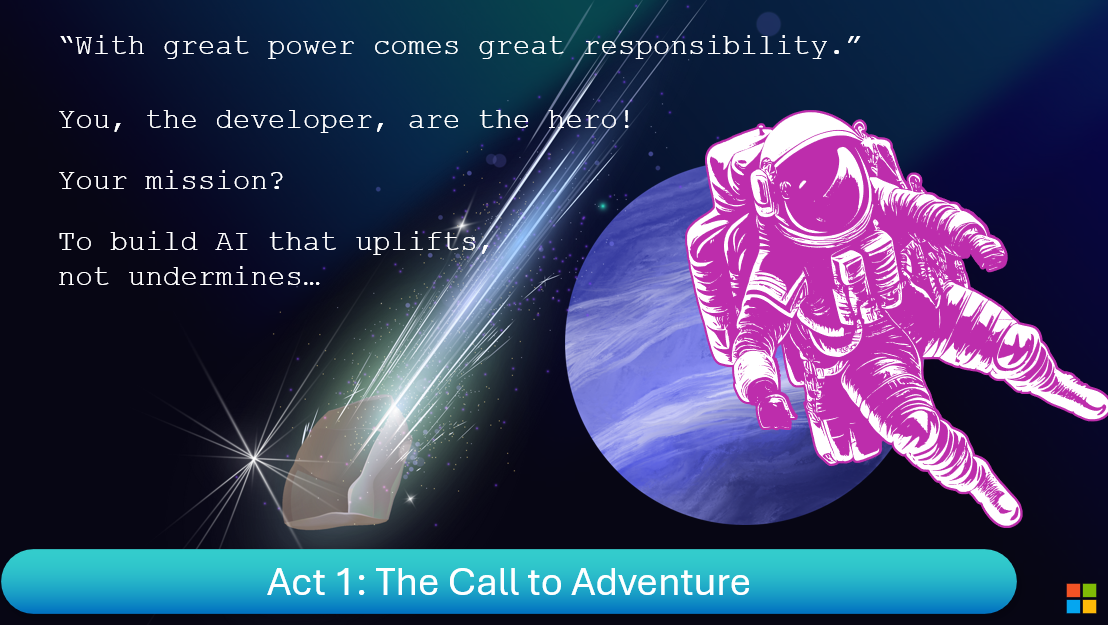
🧭 Act 1: The Call to Adventure
Developers write the code the world runs on, and with Gen AI, we're changing how things work. But with great power comes great responsibility. We can go faster, increase productivity, collaboration, and innovation, but if we don't ensure what we build is worth building, it's worse than vaporware.
The generative AI revolution offers unprecedented capabilities, but also unprecedented responsibility. This chapter sets the foundation for building AI systems that are not just powerful, but trustworthy. We'll explore how Azure AI Foundry and GitHub provide the tools to operationalize responsible AI from day one, enabling you to move fast without breaking trust.
Planning a Responsible AI Solution
Building trustworthy AI starts with intentionality:
- Define Success Metrics: Beyond accuracy—measure fairness, transparency, and user impact
- Identify Stakeholders: Who will be affected? Who needs oversight capabilities?
- Establish Governance: Use Azure AI Foundry's built-in compliance and audit trails
- Set Boundaries: Define acceptable use cases and red lines before development begins
With GitHub's collaborative development workflows and Azure AI Foundry's responsible AI toolkit, you can embed trust into every commit, every deployment, and every user interaction. The question isn't whether you can build it—it's whether you should, and if so, how to do it right.
Learning Objectives
1. Plan a Responsible Generative AI Solution
We'll cover the basics of responsible AI and how to get started right.
2. Identify Potential Harms
Next, we'll identify potential harms our AI might cause. We'll discuss common pitfalls and how to spot them early.
3. Measure Potential Harms
Once we've identified potential harms, it's time to measure them. We'll look at ways to assess the impact of our AI solution, ensuring fairness and ethical standards.
4. Mitigate Potential Harms
Just like adjusting tactics at halftime, we need to reduce any negative impacts our AI might have. We'll explore strategies to keep our AI solution on track.
5. Operate a Responsible Generative AI Solution
We'll cover key principles of ethical AI operation, ensuring we're always putting our best foot forward.
6. Explore Content Filters in Azure AI Studio
We'll explore content filters to help maintain a responsible AI solution.
Resources and Further Reading
Online Resources
Next Steps
Continue your learning journey:
Questions or feedback? Join the discussion on our GitHub repository or connect with the community.