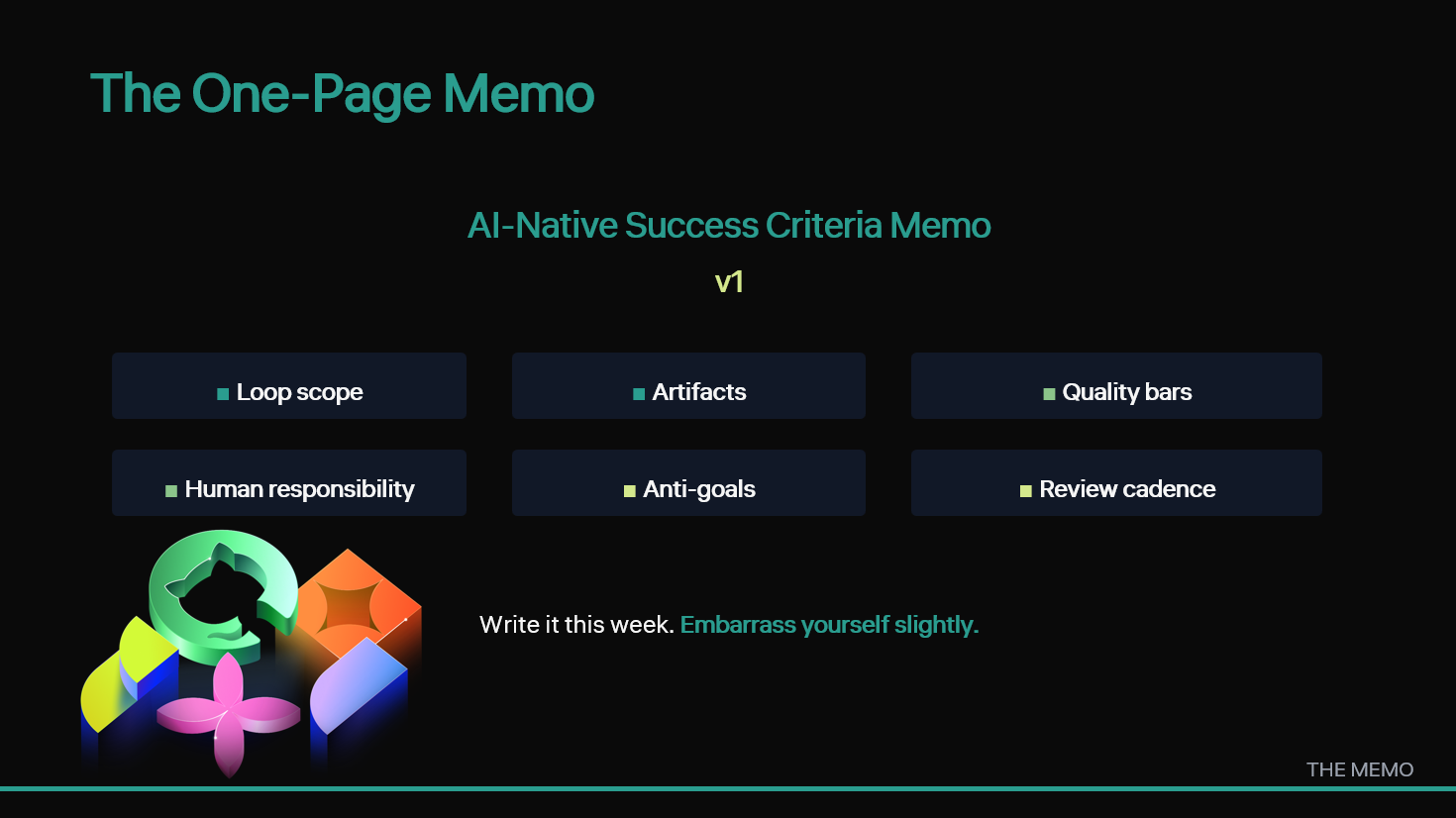
One-Page Memo
Turning conference insight into a living operating document your team can execute.
Why this chapter matters
Conference inspiration decays quickly unless translated into a working operating artifact.
The one-page memo is that artifact: short enough to read, specific enough to execute, and structured enough to govern.
Key points for your team
A practical memo template includes:
- Objective: what capability you are trying to build.
- Loop scope: which products, teams, and change types are included.
- Required artifacts: specs, traces, verification, approvals.
- Quality bars: non-negotiable thresholds.
- Human accountability: explicit decision ownership.
- Anti-goals: what you will not optimize for.
- Cadence: review and revision schedule.
A one-page memo is not a strategy document for a shelf. It is an operational document used in planning, review, and release decisions.
What to review with your team
When drafting your memo, optimize for clarity over perfection. A mediocre v1 used consistently is more valuable than an ideal v3 never adopted.
Pressure-test it by applying it to one real change and collecting feedback from engineering, security, and platform reviewers.
Iteration under real work is how this memo becomes your team's AI-native operating agreement.
Put this into practice
Publish memo v1 within one week, apply it to a pilot workflow, and schedule a 30-day review to revise based on observed friction and outcomes.