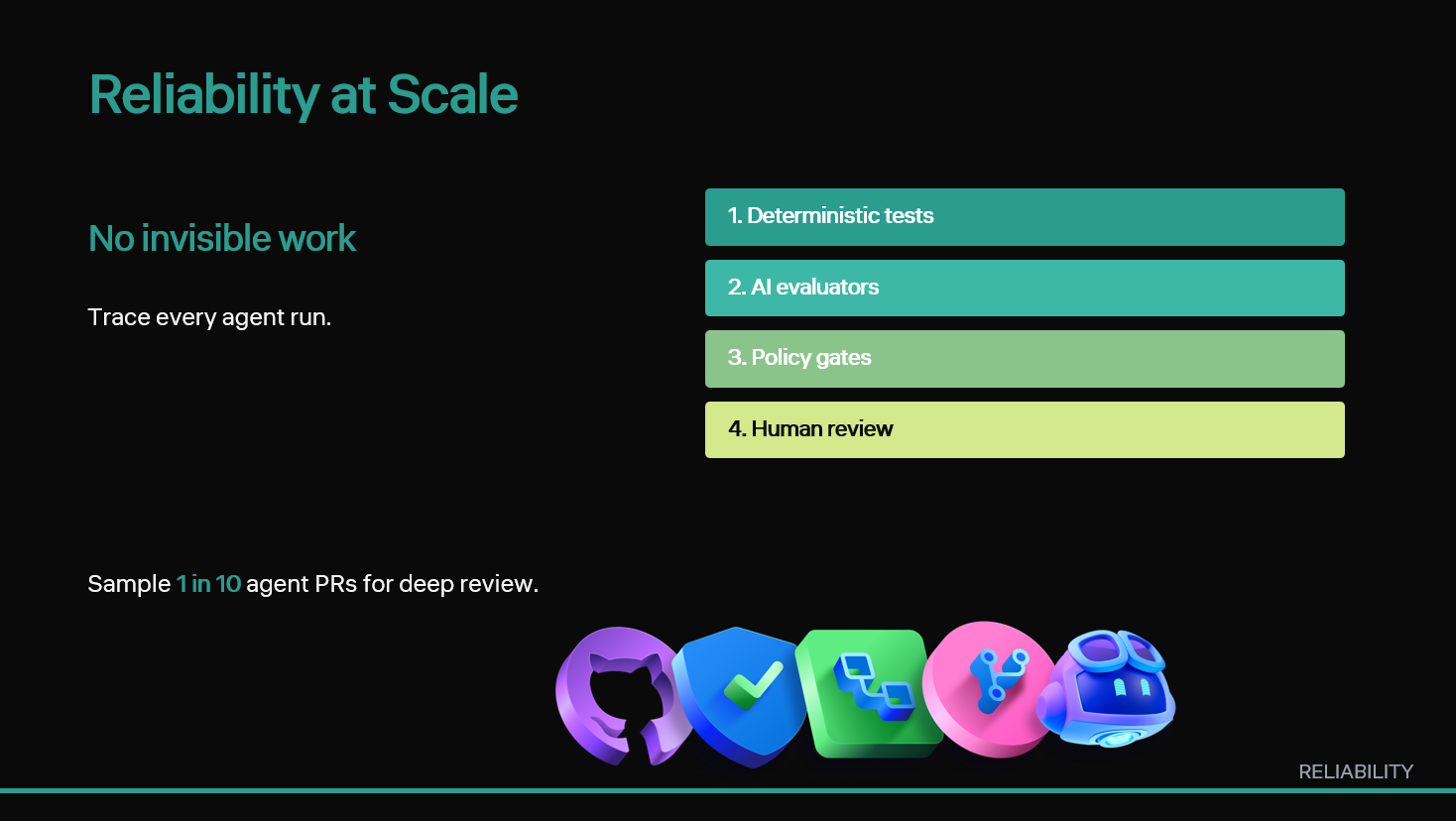
Reliability at Scale
Building reliability through traceability, layered verification, and clear review boundaries.
Why this chapter matters
AI-native systems can generate large volumes of change quickly. Reliability does not come from slowing that down. It comes from making each change explainable and verifiable.
Traceability is the foundation: if you cannot reconstruct how a change was produced and validated, you cannot operate it safely.
Key points for your team
Reliable AI-native delivery combines four layers of assurance:
- Execution traceability: model, prompt context, tools, and artifacts.
- Technical verification: tests, static analysis, and policy checks.
- Behavioral evaluation: does the change meet intended outcomes?
- Human judgment: explicit approval at defined impact thresholds.
These layers calibrate trust. High confidence allows more autonomy. Low confidence requires tighter review.
Reliability also depends on sampling discipline. Not every change needs deep manual review, but some percentage should be inspected to detect drift early.
What to review with your team
Review your current evidence chain for one production deployment:
- Can you link intent to implementation artifacts?
- Can you show verification outcomes by stage?
- Can you explain why release was approved?
- Can you identify who was accountable for final judgment?
If any answer is unclear, reliability risk is accumulating quietly.
Reliability is not a property of a model. It is a property of the system around it.
Put this into practice
Add a mandatory pull request evidence block for agent-generated work including run trace links, verification summaries, and risk classification.