AI - Friend, Not Foe
Alright, now I want to reframe the narrative.
We have been told, loudly and repeatedly, that AI will replace developers. And I get why that story sticks. It taps into very real fear, especially when you are already overloaded.
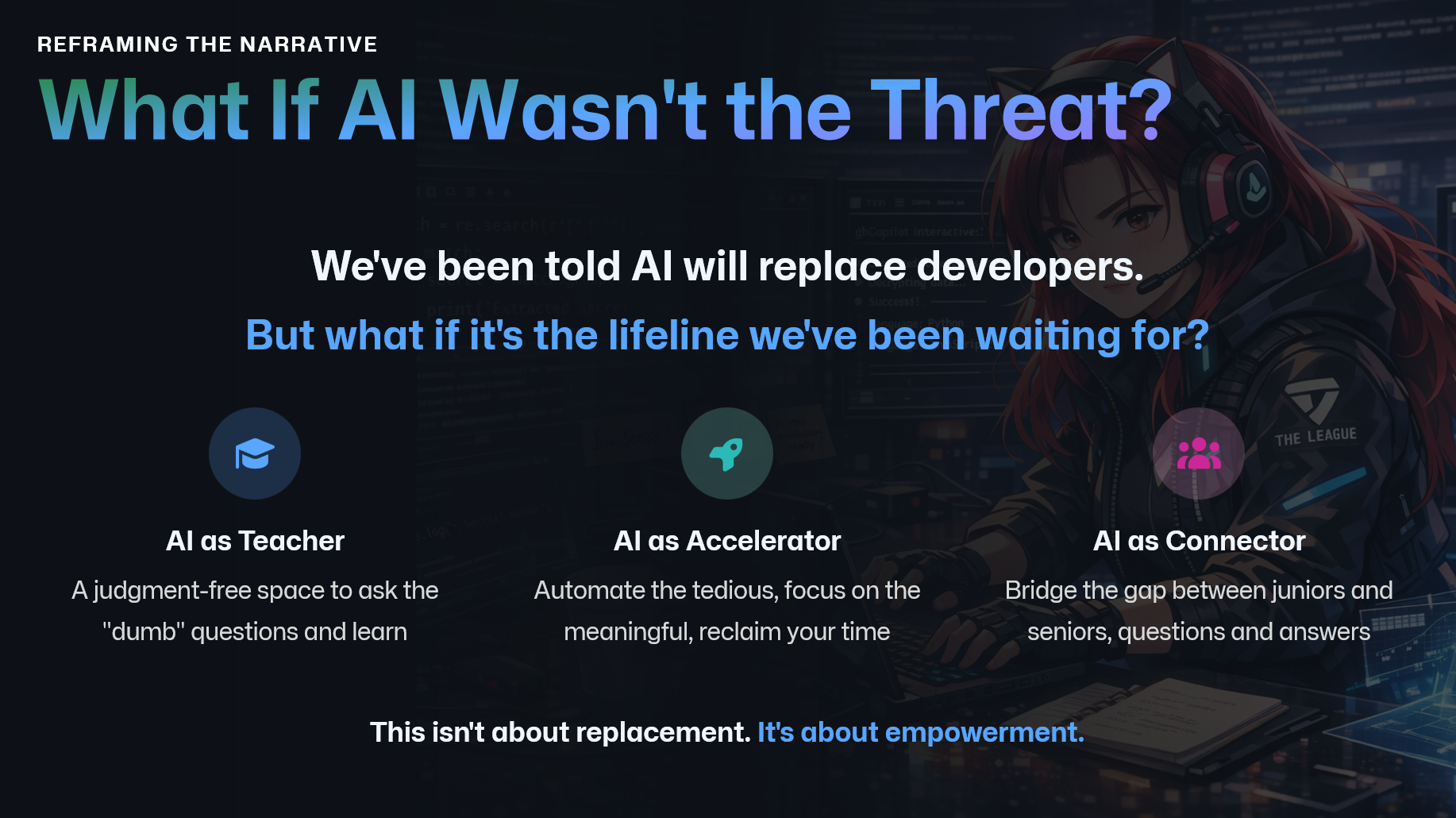
But what if AI is not the threat. What if it is the lifeline we have been waiting for.
Not a magic button. Not a replacement. A tool that helps us reduce the pressures that are burning teams out.
First, AI as teacher. A lot of learning debt comes from the fear of asking questions in public. AI can be a judgment free first stop. You can ask the ‘dumb’ question, get an explanation, ask follow ups, and do it at your pace. The point is not to accept answers blindly. The point is to remove shame and unblock learning.
Second, AI as accelerator. So much of our day is not creative work. It is tedious work: boilerplate, repetitive refactors, writing tests from patterns, translating data shapes, generating scripts, summarizing logs, drafting docs. If we can automate the tedious, we reclaim time for the meaningful. More time for design, for quality, for thinking, and honestly, for being human.
Third, AI as connector. This is the one that surprised me. AI can bridge the gap between juniors and seniors by helping people phrase questions well, by summarizing context before you ask for help, by turning ‘it does not work’ into a reproducible report. That means seniors get cleaner inputs, juniors get faster feedback, and the whole team shares understanding instead of bottlenecking on one person.
So the message of this slide is simple: this is not about replacement. It is about empowerment.
And from here on, we are going to get very practical about how to use AI in a way that builds better software and reduces burnout, without sacrificing craft, security, or trust.