Decision Making with AI
How to use models for decisions that matter, without outsourcing accountability with them.
Decisions vs. drafts
Models are excellent at drafting. They are dangerous when used for deciding without scaffolding.
The trick is to be honest about which mode you're in.
| Mode | The model's role | The human's role |
|---|---|---|
| Drafting | Generate options, expand the search space. | Pick, edit, approve. |
| Filtering | Narrow a large set against criteria. | Define criteria, audit samples. |
| Deciding | Recommend, with reasoning. | Decide, on the record. |
| Acting | Execute approved decisions. | Define guardrails, monitor. |
You get into trouble when you slide from one mode to the next without noticing, usually from "filtering" into "deciding" because the volume got too high to review.
A decision-grade checklist
For any AI-assisted decision that affects a person:
- [ ] The decision criteria are written down, separately from the model.
- [ ] The model's recommendation is recorded with its reasoning.
- [ ] A human is named as the decider.
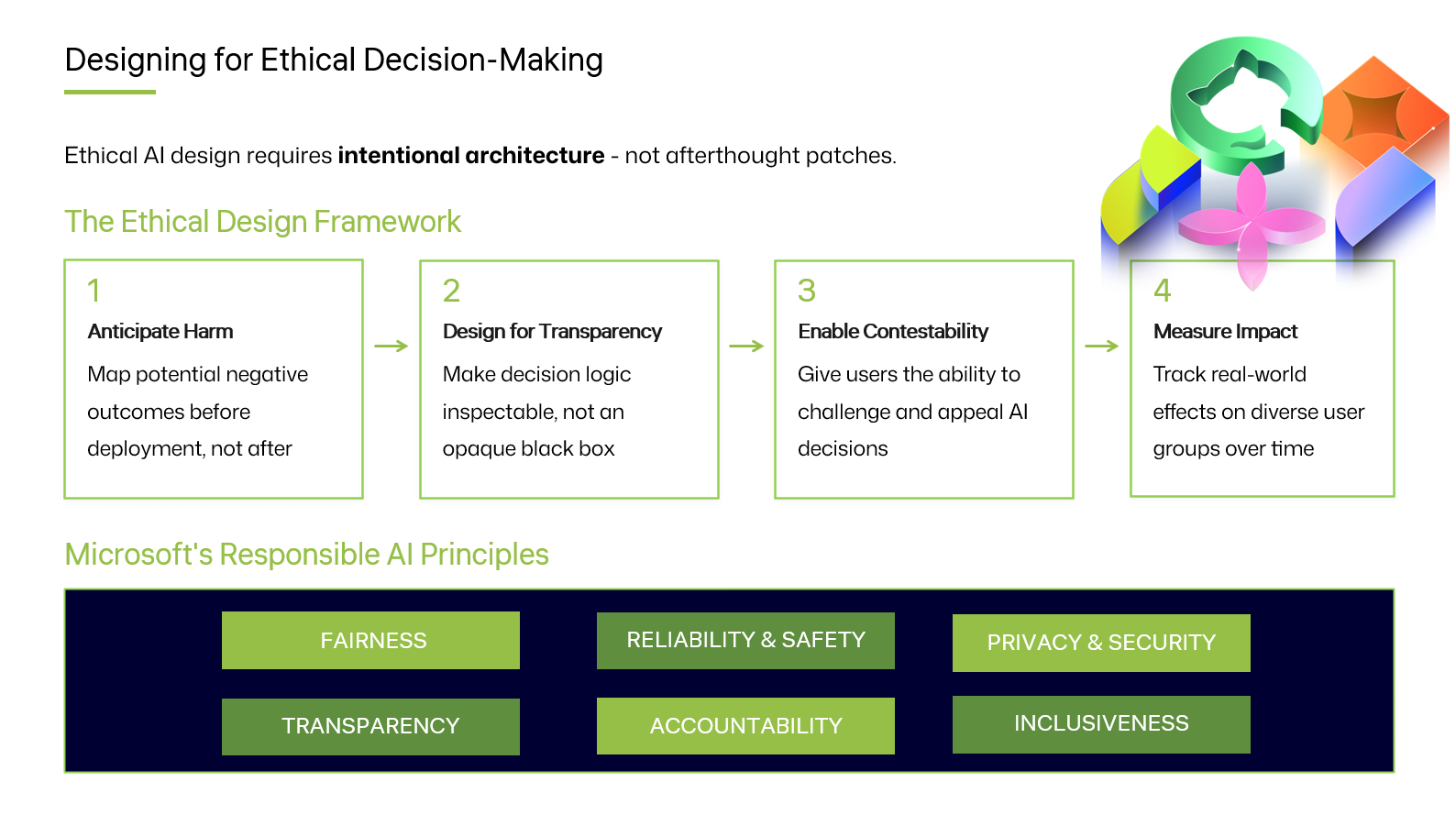
- [ ] The affected person can ask why, and get a real answer.
- [ ] There is a path to challenge the decision.
If you can't tick those five, you are not making a decision, you are delegating accountability to a system that can't hold it.