It's a Feature, Not a Bug
Hallucinations, uncertainty, refusal, sometimes they're the product working.
Reframing the "bug" list
When people complain about LLMs, the complaints usually land in three buckets:
- It made things up.
- It refused to do the thing I asked.
- It said it wasn't sure.
Here's the uncomfortable take: all three are often the product working as intended.
Hallucination as a calibration problem
A model that generates fluent, plausible text will generate fluent, plausible text even when it doesn't know. That's not a bug, that's how generative systems behave. The bug is shipping that text without grounding (retrieval, tools, citations) and without a UX that signals uncertainty.
Fix the system, not the model.
Refusal as a safety feature
A model that refuses to help you write a phishing email is doing exactly what we want. Yes, refusals are sometimes over-broad. Yes, that's annoying. But "annoyingly cautious" is a better default than "cheerfully harmful."
"I'm not sure" as a gift
If your model can tell you it's uncertain, expose that in the UI. A confidence band, a "verify this" badge, a citation link, these are how you turn a probabilistic system into a trustworthy one.
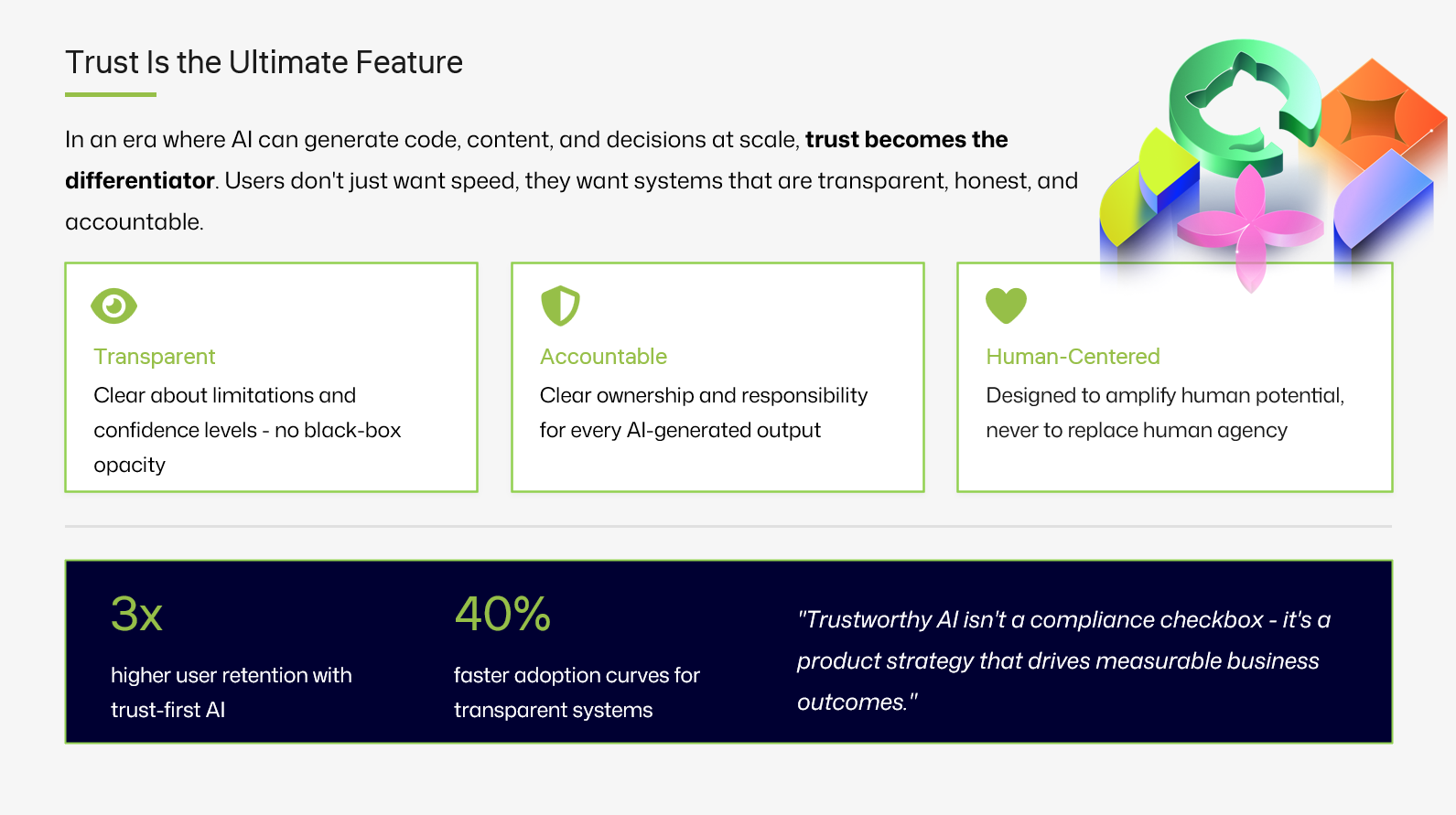
The features we used to call bugs are the surface area you build trust on top of.