The Demo: A Squad Clears a Backlog Item#
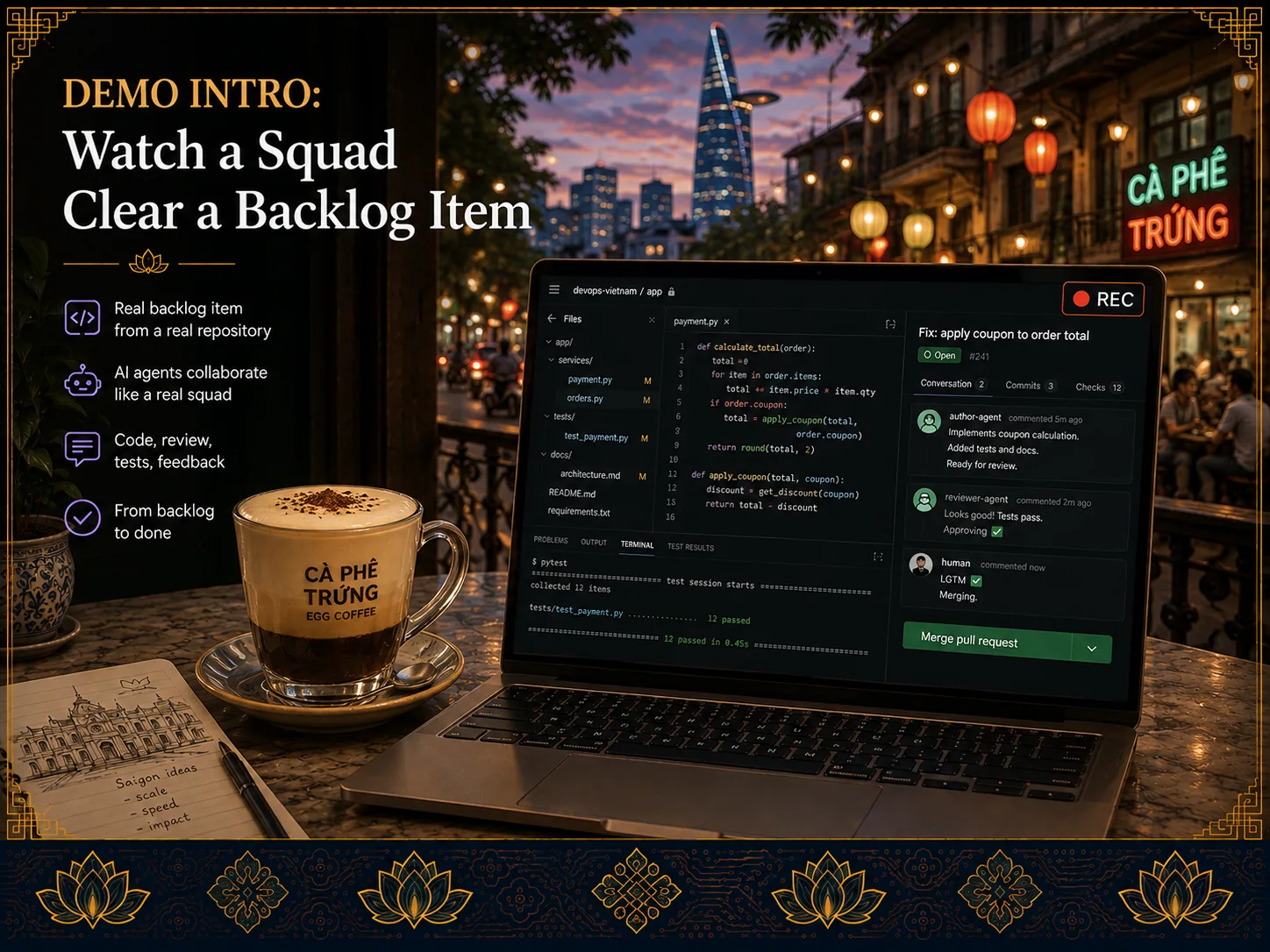
What the live demo showed#
The talk's demo was deliberately unscripted: a real backlog issue, assigned live to GitHub Copilot's coding agent, with a second agent reviewing the resulting pull request before a human made the final call. The point wasn't to show a trick - it was to show the ordinary, repeatable loop that Chapters 5 and 6 describe in the abstract, running end to end.
The loop, step by step#
- Assign - a scoped issue with clear acceptance criteria is assigned to the coding agent, the same way you'd assign it to a teammate. See About Copilot coding agent.
- Code - the agent works in its own environment, makes the change, runs the existing test suite, and opens a draft pull request describing what it did and why.
- Review (agent) - a second agent - the Rubber Duck from Chapter 5 - reviews the diff against the repository's conventions and the linked issue, flagging anything inconsistent before a human's attention is spent. Copilot code review can run exactly this pass automatically on pull requests.
- Review (human) - a person reads the diff, checks the flagged points, confirms CI is green against required status checks, and decides whether it's actually correct - not just plausible.
- Merge - the human approves. As the demo put it: "I checked the diff. I own this merge." That sentence is Rule Zero, said out loud, at the exact moment it matters.
Why the sequence matters, not just the tools#
The value isn't "an agent wrote code" - that's table stakes now. The value is the sequence: scoped assignment → agent execution → automated + agent review → human accountability, all inside the same pull request workflow your team already uses for human-authored changes. Nothing about branch protection, required reviews, or CI changes. The unit of work changed; the governance around it didn't have to be reinvented.
Exercise: run this loop on one real ticket#
Pick one item from your "agent-ready today" tier (from Chapter 6's exercise). Assign it to a coding agent, turn on an automated code review pass, and time the full loop from assignment to your own merge decision. Write down what you actually checked before merging - compare it against your team's Rule Zero statement from Chapter 2 and see if they match.
Further reading#
- About Copilot coding agent - GitHub Docs
- Using GitHub Copilot code review - GitHub Docs
- GitHub Copilot coding agent 101: getting started with agentic workflows on GitHub - The GitHub Blog