Chapter 09 / 17
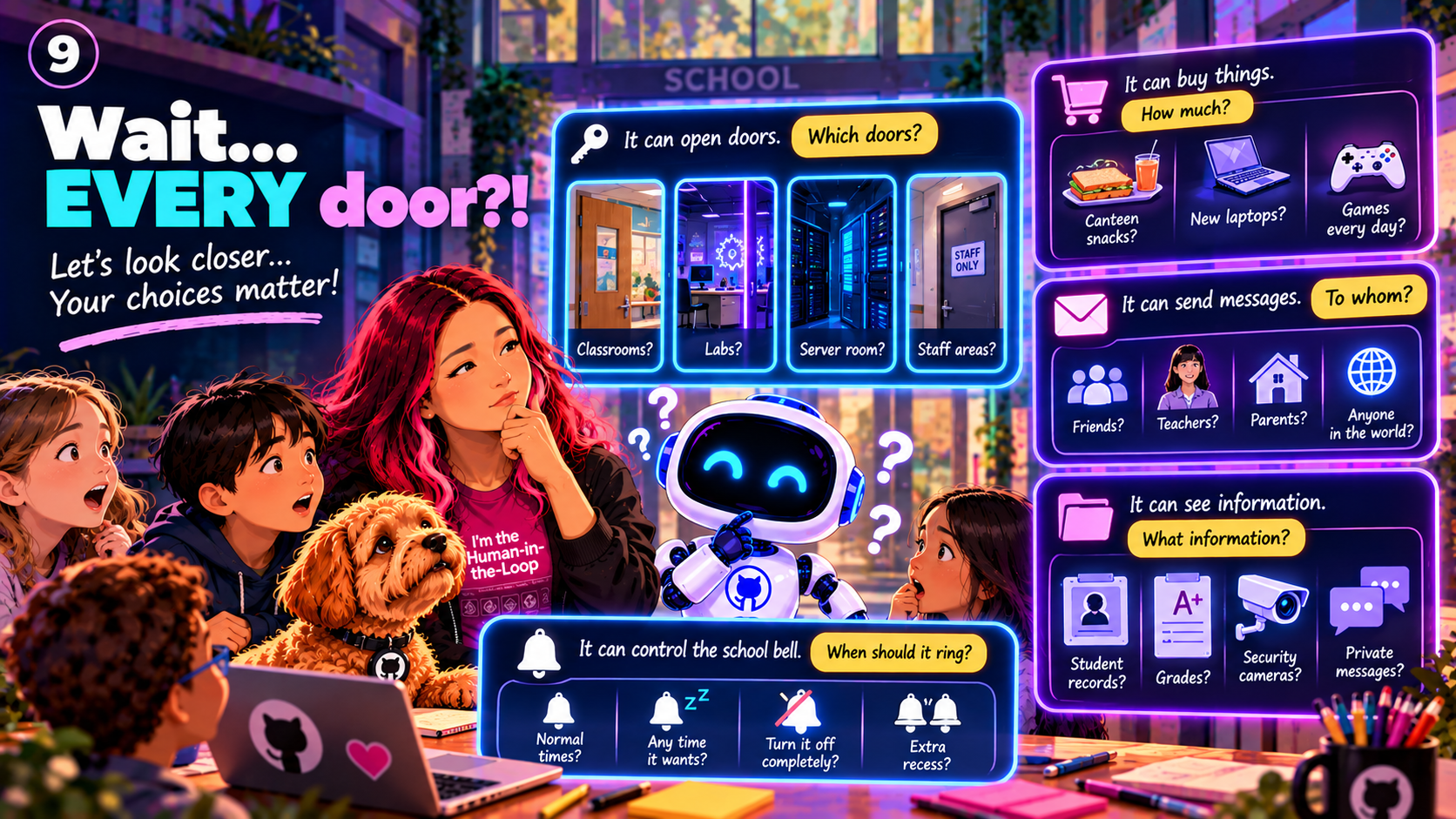
Should the robot open every door?
Imagine a robot that can open doors. Giving it access to every room might be convenient, but would that be wise?
Only what it needs
A robot delivering books may need access to the library, not to every classroom or private office. Limited permissions reduce the harm from mistakes.
Rules can change
People should be able to grant, review, and remove access. The robot should ask for help when a door is outside its permissions.
Amira gives the robot a key
Amira's library hired a little robot to return books to shelves. She suggested giving it a key to every room so it would never get stuck. The librarian pointed out that the art cupboard and staff office were not part of its job.
They gave the robot access to the library and added a rule: if it met a locked door, it should ask for help. Amira learned that a helpful robot should only get the permissions it needs, and a person should be able to change those permissions.
A real-life example
A school tablet app may need permission to use the camera for a science photo activity, but it does not need access to every file or contact. Check permissions with a trusted adult.
Choose robot permissions
- Imagine a robot delivering books at school.
- List the rooms it needs to enter for its job.
- List one room it should not enter.
- Make a rule for what it should do if it reaches that room.