Chapter 11 - Responsible AI
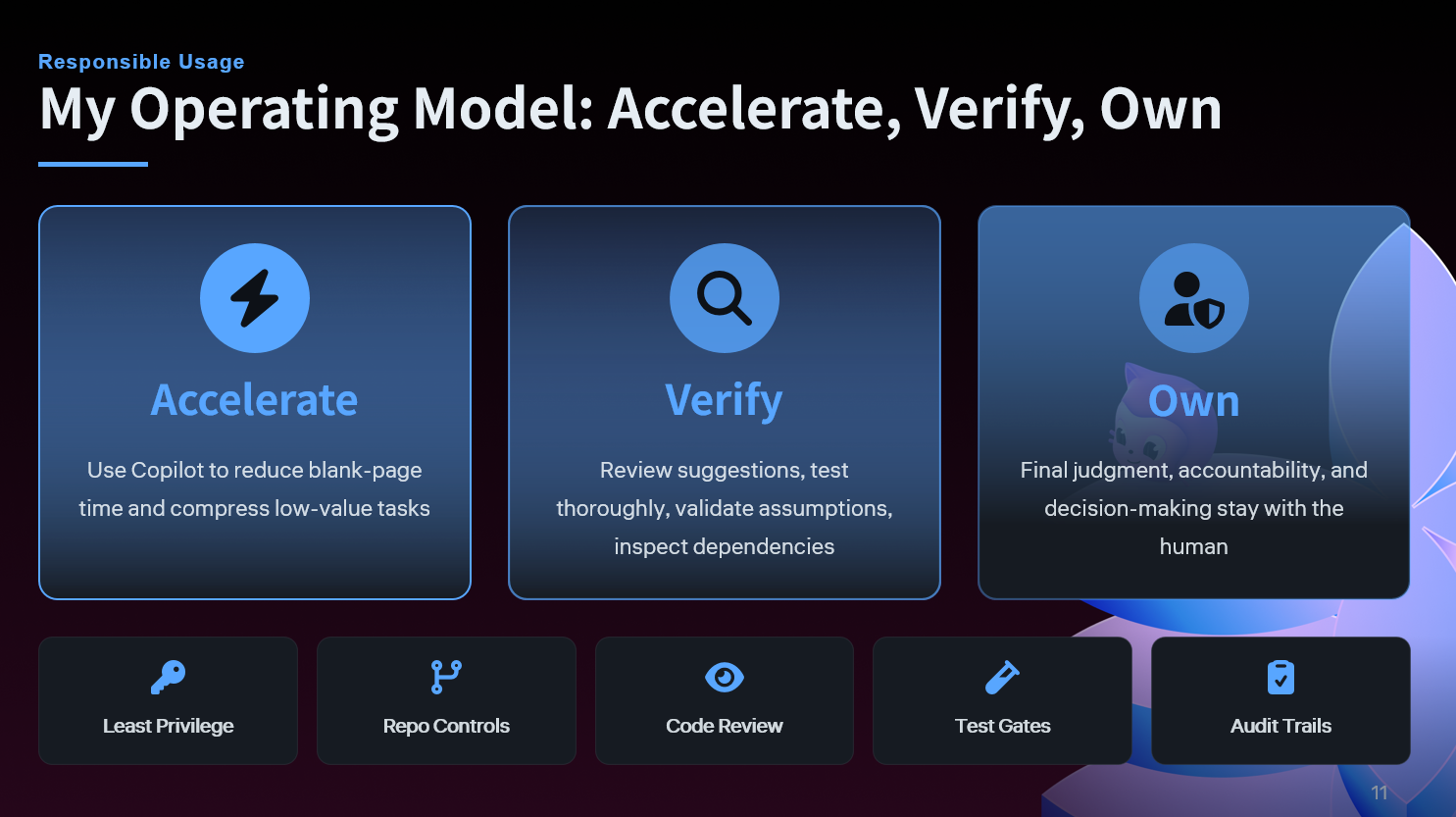
I own the code. Not the model. Not the vendor. Me.
Let me be unambiguous about responsibility, because the industry tends to get vague here and vague is dangerous.
When code I shipped causes a problem, a bug, an outage, a security incident, a biased outcome, a data leak, I am responsible. Not Copilot. Not the agent. Not the model. Me. My name is on the commit. My name is on the PR. My judgement signed off.
That responsibility shapes how I use the tool:
- Oversight is non-negotiable. I do not merge code I haven't understood. "The AI wrote it" is not an explanation; it's an excuse, and excuses don't survive a post-mortem.
- Approval is a deliberate act. Clicking merge is a decision, not a reflex. I treat it like I'd treat signing a contract.
- Checks and balances are stacked. Tests, scans, peer review, staged rollouts. Multiple independent ways to catch the same class of mistake.
- Bias and fairness get explicit attention. Especially in anything user-facing. Generated code is not neutral, it reflects what it was trained on.
- Privacy and data handling stay in my head. I do not paste secrets, customer data, or sensitive context into prompts. The tool is a collaborator, not a confessional.
- I disclose where it matters. If a process owner needs to know AI was used, they get told.
Responsible AI isn't a policy poster on the wall. It's a set of small decisions I make every hour. Done well, it's invisible. Done badly, it's the headline.